Tuesday, November 30, 2010

A Holiday Message and Theological Response to “The Median Isn’t the Message” from Meso Survivor Pastor Charles Van Kirk

November 30, 2010

By John Caron:

A few days before Thanksgiving, I came back across the insightful and inspirational essay “The Median Isn’t the Message” written by Harvard and NYU evolutionary biology professor Stephen Jay Gould shortly after he was diagnosed with peritoneal mesothelioma in 1982.

In the essay, Professor Gould discusses his reaction to the median survival statistics of only eight months for patients diagnosed with his disease. Rather than resign himself to this fate, Professor Gould explained that statistics are merely abstractions which do not encompass the full range of variation and concluded that he should be in the favorable half of the upper statistical range because of his age, positive attitude, early diagnosis and the fact that he received the best available medical treatment. Professor Gould proved to be correct, surviving 20 years following his diagnosis with mesothelioma before passing away due to an unrelated condition.

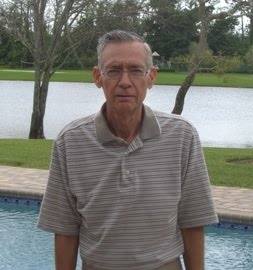
I thought some of my mesothelioma clients would enjoy reading this timeless and optimistic piece and forwarded it to them along with a Thanksgiving greeting. Once such client was Thurl Charles Van Kirk, Pastor of the Rim of the World Community Church in Running Springs, California. “Pastor Chuck” has himself defied the statistics by surviving almost three years since his diagnosis with biphasic mesothelioma—and counting!

Knowing that Pastor Chuck received degrees in theology before serving 30 years as a Pastor, I was eager to receive his perspective on the evolutionary biology professor’s essay about statistics and survival. Pastor Chuck certainly did not disappoint.

Printed below with his permission is Pastor Chuck’s eloquent and thoughtful response culminating in a timely and valuable prayer for this Holiday Season.

Please enjoy and pass along to others.

Thanks again Pastor Chuck!

Dear John:

Thank you for the article, “The Median Isn’t the Message” by Stephen Jay Gould. It reminds me of a passage in Luke 16.8,

“…There was a certain rich man who had a steward, and
this steward was reported to him as squandering his
possessions.

And he called him and said to him, ‘What is this I
hear about you? Give an account of your stewardship, for
you can no longer be steward.’

And the steward said to himself, ‘What shall I do,
since my master is taking the stewardship away from me?
I am not strong enough to dig; I am ashamed to beg.

I know what I shall do, so that when I am removed from
this stewardship, they will receive me into their homes.’

And he summoned each one of his master’s debtors,
and he began saying to the first, ‘How much do you owe my
master?’

And he said, ‘A hundred measures of oil.’ And he said
to him, ‘Take your bill, and sit down quickly and write fifty.’

Then he said to another, ‘And how much do you owe?’
And he said, ’A hundred measures of wheat.’ He said to him.
‘Take your bill, and write eighty.’

And his master praised the unrighteous steward because
he had acted shrewdly; for the sons of this age are more shrewd
in relation to their own kind than the sons of light.”

Professor Gould shed some light upon a gloomy topic. Statistics, ah, in college I spent a year deriving formulas by hand just in case our computers crashed. Through all the exercise of tangent and co-tangent, designing experiments and penning down conclusions, never mind their significance; we learned that Professor Gould was right. Statistics can be so stretched. And there is that mystical point where truth gives way to lies and lies fade into truth. “It’s all relative? To what? To whom?” My answers came from the study of theology.

What appeals to me in the above scripture appears in its preface, “this steward was reported to him as squandering his possessions.” Professor Gould dazzles the reader with his understanding and definitions. But the point in Luke’s account is that there shall be a day of accounting where the mean and the median will be required for each of us.

Yes, attitude is everything. At times my hardest struggle is just to get up in the morning. Deep, throbbing pain in my side demands attention. So I pop some pain meds and lay back down pondering what heaven will be like when we receive new bodies that never break down, get sick, wrestle with illness or suffer!

So thank you again. I’ll be seeking to be in the distribution of those who thrive even in the midst and realities of diseased bodies. The steward was wise in how he finally got those uncollectible accounts to pay up. It wasn’t the full measure but something is better than nothing. I suspect his employer had been trying to receive payment for years from his debtors. This shrewd servant found a way to endear himself with his master and those who owed him money.

My prayer for you and yours this holiday season is that you make time to celebrate the little things, the kindnesses and tenderness afoot from strangers, friends and family. Perhaps we as sons of light might advance those in our sphere of influence to reconsider the glory of Christmas, the cheer of Thanksgiving and fulfill the goals our master bids us do in 2011.

God Bless,

Charles Van Kirk

Tuesday, November 9, 2010

Mesothelioma: A Patient's Road Map

Patients diagnosed with mesothelioma find themselves at the beginning of a journey. Because of the rarity of the disease and the developing nature of the treatments, it is a journey that will take them on sparsely-traveled, out of the way back-roads. The kind of roads that are often difficult to navigate. Difficult, that is, unless you have a good road map.

The Pacific Meso Center has assembled a new brochure entitled: "Mesothelioma: A Patient’s Road Map" to help mesothelioma patients navigate the many roads before them on their journey to proper diagnosis, treatment and coping with their disease.

The Pacific Meso Center is a division of the Pacific Heart, Lung & Blood Institute ("PHLBI") which is dedicated to meaningful advancements in the treatment and prevention of mesothelioma. PHLBI is a 501 (c)(3) non-profit institution founded in 2002 by Roger Worthington and Dr. Robert Cameron, head of the Mesothelioma Program at UCLA Medical Center. Dr. Cameron serves as the Pacific Meso Center's Scientific Advisor and is the innovator of the lung-saving pleurectomy/decortication procedure for pleural mesothelioma.

To get your free copy of "Mesothelioma: A Patient's Road Map", please call us at (800) 831-9399 or email us at info@rgwpc.com

Tuesday, October 26, 2010

"So many of us need this kind of information because without it, it's hard to know where to start."

In February of 1999, Canadian Paul Douglas first heard the word ‘mesothelioma’ as it came out of his doctor’s mouth. At that meeting, his doctor told him "go home, do your paperwork you've got 3 to 6 months to live."

He was told about his treatment choices from chemotherapy, radiation and radical surgery. Surgery was his least favorite choice.

His ex-wife Linda had remained a good friend and she soon began surfing the Internet and “low and behold I found www.mesothel.com”. According to Paul, "Thanks to Roger Worthington's website Linda was able to access information on mesothelioma and clinical trails that were taking place across the U.S. Here in Canada the resources are not available for this type of research."

Paul took part in a clinical trial offered in Bremerton Washington. He began the trial in April of 1999. Nine weeks later his first cat-scan revealed "no tumors at all."

We followed Paul and his battle for the next 11 years! Over that time he helped dozens of people from all over the world facing this same battle. He shared his knowledge and support of others with joy and purpose. He helped others to fight as he did but most importantly, he offered them hope and inspiration.

In July of this year he reported to us that he and his wife Sharon had just returned from trips to Maui and Las Vegas.

Sadly, on October 20, Paul passed away due to a heart attack. His wife and family hope his message to keep fighting and never giving up will continue to live on.

Friday, October 22, 2010

Asbestos Bankruptcy Trust Update for October 22, 2010

Leslie Controls on the Fast Track to having its “Pre-Packaged” Bankruptcy Plan Approved­Could Begin Paying Claims by Early 2011

Leslie Controls, Inc., a wholly-owned subsidiary of CICOR International, Inc., filed for Chapter 11 bankruptcy protection in July 2010 citing overwhelming liabilities for current and future asbestos injury claims.

Since the early 1900’s, Leslie was a major manufacturer of industrial water heaters and steam control systems. Leslie was a large supplier of valves and other steam equipment to the United States Navy during World War I and World War II. Leslie’s products, which were often equipped with asbestos gaskets, insulation and packing, were responsible for exposing thousands of Americans to harmful asbestos fibers.

Upon filing for Chapter 11, Leslie received temporary immunity from all pending and future lawsuits brought by asbestos illness victims. Leslie will be entitled to permanent immunity upon certification of its bankruptcy plan by the bankruptcy court and approval by a Federal District Court. The one consolation to asbestos injury victims is the requirement that Leslie’s bankruptcy plan provide for the funding of a trust and a system for compensating claimants based on factors including the severity of their illness.

Leslie made substantial progress toward its emergence from bankruptcy when it obtained the asbestos claimant votes necessary for approval of its bankruptcy plan earlier this month. For the plan to be affirmed by the courts, bankruptcy law requires approval by at least 75 percent of current asbestos claimants. The vote on Leslie’s plan was completed on September 27, 2010, and on October 8, 2010 the balloting agent reported to the U.S. Bankruptcy Court that more than 75 percent of claimants had voted in favor of the plan.

Based on the progress to date, CIRCOR is targeting the plan’s affirmation by the courts and Leslie’s emergence from bankruptcy for the fourth quarter of 2010. Accordingly, it is conceivable that Leslie’s bankruptcy trust could begin processing claims by early 2011.

If the trust begins paying injury claims within a year of Leslie’s filing for bankruptcy, this would rank as one of the faster completions of this process among all asbestos bankruptcy trusts. By comparison, of the nine other companies which currently have proposed bankruptcy trusts pending approval, one has been in bankruptcy for over ten years, two over nine years, and another two over six years.

Leslie’s progress can be attributed to its use of a “Pre-packaged” bankruptcy plan. As compared to other bankruptcies, where the company files and thereafter begins negotiating a plan of reorganization with creditors, a pre-packaged approach involves negotiating a plan before the company files bankruptcy. Under a pre-packaged approach, the company is able to negotiate with creditors under less formal conditions, often behind closed doors, and deliver a plan of reorganization satisfying applicable rules at the same time the company files bankruptcy.

Check back often to Mesothelioma Bytes for breaking news about the Leslie Trust and other active and pending asbestos bankruptcy trusts.

Also, for information on how asbestos bankruptcy trusts came to exist, how trust claims are processed and the current status and future outlook of these trusts, see our comprehensive guide to asbestos bankruptcy trusts entitled: “Asbestos Bankruptcy Trusts: The Good, The Bad And The Ugly.”

Thursday, October 21, 2010

Study Involving New Chemotherapy Combination Shows Improved Results Over Cisplatin for Pleural Mesothelioma

To date, chemotherapy drugs used to treat mesothelioma have primarily included cisplatin, onconase, carboplatin, gemcitabine, navelbine and pemetrexed (Alimta). In some cases, these medications have been noted to stall the progression of mesothelioma tumors. Chemotherapy, however, has been shown to be most effective when combined with surgery, radiation, or other treatment modalities, known as multi-modal treatment.

Since 2004, the only chemotherapy regimen which the FDA has approved for pleural mesothelioma is cisplatin and Alimta. The approval, however, is limited to patients who are not surgical candidates.

A recent European study has monitored the results of cisplatin used in combination with a drug called Tomudex (raltitrexed) for pleural mesothelioma. The study has shown improved median survival rates for patients on the cisplatin-Tomudex combination as compared to cisplatin alone.

Tomudex is an injectable cytotoxic medication used to treat different forms of cancer. The medication belongs to a group of cancer-fighting drugs called antineoplastics. Tomudex combats cancer by preventing cancer cell growth, which in time leads to their elimination.

In the study, one group was treated with cisplatin alone and another group was treated with both cisplatin and Tomudex. The overall response rate for the cisplatin-Tomudex group was higher than the cisplatin group, 23.6 percent and 13.6 percent, respectively. Tomudex was shown to improve median overall survival by 2.8 months and Tomudex was associated with improved progression-free survival.

Professor J.P. van Meerbeeck (professor of Thoracic Oncology at Ghent University, Belgium) said, “Malignant pleural mesothelioma is a hard to treat, rare cancer with a poor prognosis. New treatment options such as a combination of cisplatin and raltitrexed, which improve patient outcomes with no detrimental effect on quality of life as compared to cisplatin alone are a welcome addition to our therapeutic portfolio.”

Tomudex is currently licensed for the treatment of pleural mesothelioma in Portugal, Czech Republic and Hungary. Additional licensing is expected across Europe in late 2010.

Please check back with Mesothelioma Bytes for future updates on the testing and approval of Tomudex in the treatment of mesothelioma.

Monday, October 18, 2010

"It is important for us to stay on top of the new discoveries in medicine connected to mesothelioma and your website does just that.”

"South Florida's changed so much," says Howard Ornstein, who relocated to the Sunshine State with his family in the 1950's. "Time was you could see straight to the water, but with all of the over building and high rise construction, Miami Beach is invisible unless you're on the front row."

The early days of South Florida bring back halcyon memories for Howard and his wife Roselyn. "Parkland is just like a little town, even though it's on the outskirts of Fort Lauderdale. Growing up our kids did everything, tennis, karate, horseback riding, the local football team…everyone knew everyone else."

Back in March of 2008, Howard was diagnosed with malignant pleural mesothelioma. In his search for treatment, he land his wife Roselyn left no stone unturned.

  • Chemotherapy did a good job for awhile, but the Ornsteins were always on the look out for new treatments.
  • In 2009 they visited the ITL clinic in the Bahamas.
  • In 2009 they also visited with Dr. Robert Taub in New York.
  • Howard took supplements made from asian mushrooms that he says, "help slow the progression of the disease." Howard also stated, "you have to be in the right frame of mind."
  • He is in that frame of mind and has a pretty accomplice to help him enjoy it.

It is now October of 2010 and Howard is still going strong!

"I feel good, just a bit tired sometimes. My appetite is still good and Roselyn makes sure I clean my plate.

After his third chemotherapy treatment, Howard will undergo a CT scan and be evaluated for any further treatments.

Way to go Howard! Keep up the good work.

Tuesday, October 12, 2010

Worthington Law Firm Announces New Guide to Asbestos Bankruptcy Trusts

“Asbestos Bankruptcy Trusts: The Good, The Bad And The Ugly”

Since the early 1980’s, companies responsible for inflicting asbestos-related illness on hundreds of thousands of Americans have sought to limit or escape legal liability through filing Chapter 11 bankruptcy.

By filing Chapter 11, a company is given immediate immunity from lawsuits filed by the victims of its asbestos products. The company is then given many years to satisfy a number of legal requirements while the victims, many of whom do not have the luxury of time, are forced to wait. Upon meeting the requirements, the company is granted permanent immunity from lawsuits filed by all past and future victims, and is able to emerge from bankruptcy and continue doing business as usual.

The one consolation to asbestos illness victims is the requirement that the company pool assets and insurance proceeds and place them in a trust to compensate past and future victims. The trust establishes guidelines dictating the amount of compensation to be paid to claimants based primarily on severity of illness. While it is not necessary for victims to appear in court or provide testimony, the amount received from the trust is often far less than what would have been received if the company could be sued in a lawsuit.

Despite their many shortcomings, asbestos bankruptcy trusts are becoming an increasingly important component of the compensation available to victims of asbestos disease. This is due to a continuing decrease in the number of viable companies that can be sued in court and a continuing increase in the number of companies filing Chapter 11 bankruptcy.

In order to aid in the understanding of how asbestos bankruptcy trusts came to exist, how trust claims are processed and the current status and future outlook of these trusts, we have assembled a comprehensive guide to asbestos bankruptcy trusts entitled: “Asbestos Bankruptcy Trusts: The Good, The Bad And The Ugly.” Click here to review this helpful resource and continue to visit Mesothelioma Bytes for the latest news on asbestos bankruptcy trusts.

If you have any questions, or would like to learn more, please contact us at info@rgwpc.com or 1-800-931-9399.